
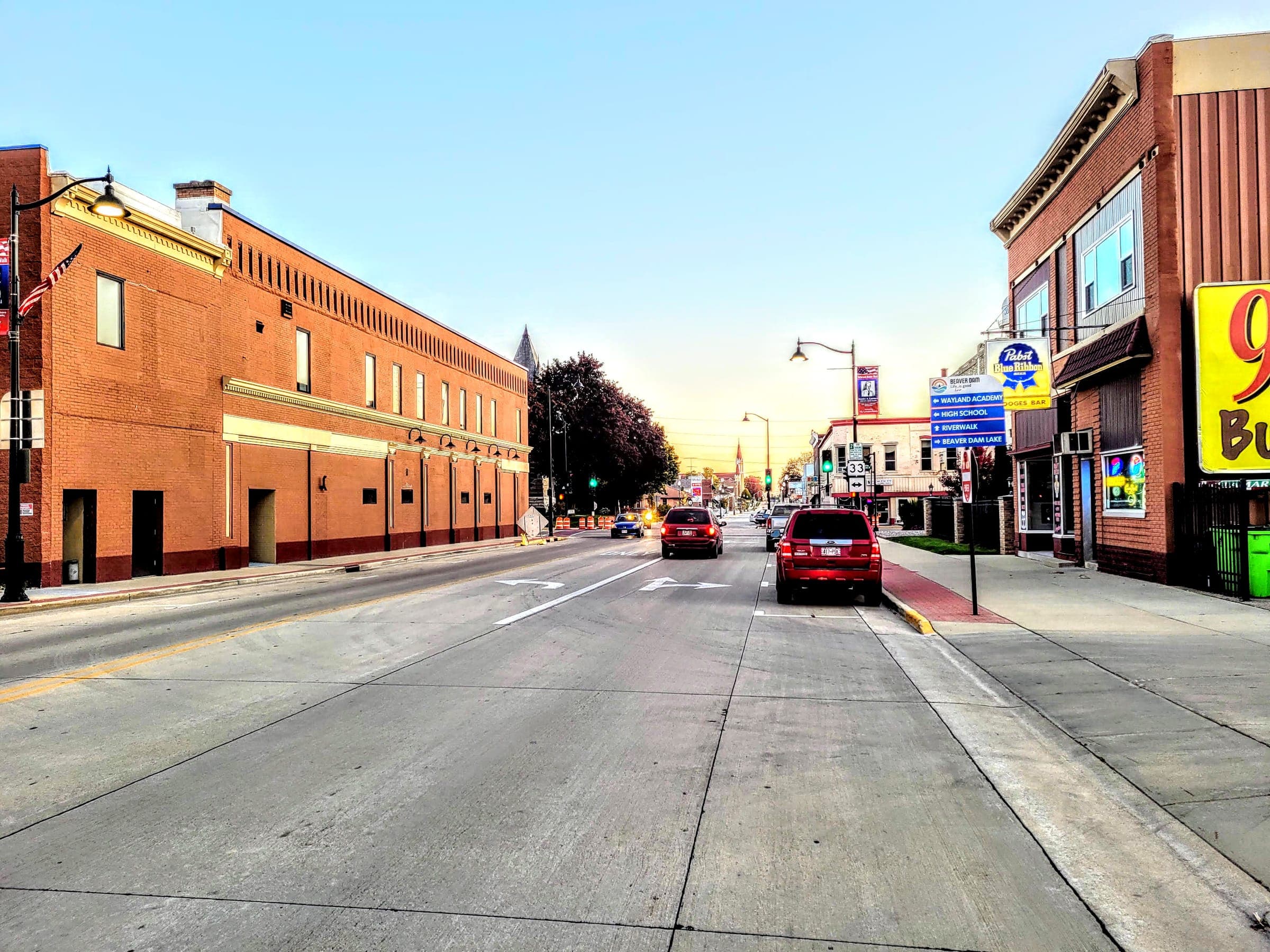
Most marketing advice for small businesses was written in Austin or Brooklyn. It assumes a level of competition, a kind of customer, and a media diet that does not match the businesses we work with in Wisconsin. This is the playbook calibrated for here.
We work with manufacturers in Beaver Dam, professional offices in Waupun, retailers in Brownsville, and family operations scattered across Dodge County, Fond du Lac County, and the rest of the Madison–Milwaukee corridor. The pattern across all of them is the same: the businesses are excellent at what they do, the local reputation is real, and the digital presence is roughly twenty years behind what their work deserves. This post is about how to close that gap without spending big-city money to do it.
The Wisconsin small-business landscape, briefly
Wisconsin's small-business economy is a mix of four things in roughly equal measure: manufacturing and skilled trades, agriculture (dairy especially), retail and hospitality, and professional services. Each has its own marketing physics, and the playbook for each looks different even within the same town.
What the four have in common: customers in Wisconsin tend to be deliberate. They take longer to decide than coastal-city customers, they check more references, and they reward consistency. That changes what marketing should look like. The flashy launch campaign does not work as well here as the quiet, steady presence that has been there for three years when somebody needs it.
The other Wisconsin fact: the economic geography pulls in two directions. Most rural businesses sit between two metros — Madison to the west, Milwaukee to the east — and a meaningful share of their customer base commutes to or sources from those metros. A business in Beaver Dam serves Beaver Dam first, but it also serves the people who live in Beaver Dam and work in Madison or Milwaukee. The marketing has to reach both.
The four search habits unique to Wisconsin customers
Search behaviour in Wisconsin small towns differs in identifiable ways from coastal cities. Four patterns worth knowing:
The town name is the qualifier. A Brooklyn customer searches "best pizza SoHo." A Wisconsin customer searches "Beaver Dam pizza" or just types the town name plus a service. The town is the constant. The service is the variable. A website that mentions the town in titles, headings, and body copy ranks for those queries almost automatically. A website that says "we serve the area" ranks for nothing.
The county shows up surprisingly often. Especially for service businesses — HVAC, roofing, legal, accounting — Wisconsin customers add the county name to their search. "Dodge County roofer." "Fond du Lac County family law." This is a Wisconsin habit that does not exist in most other states. Service-area pages titled with the county outrank service-area pages titled with the metro almost every time in rural Wisconsin markets.
Facebook is still load-bearing for older customers. A meaningful share of customers over 50 still discover small businesses through Facebook posts, not Google. A small Wisconsin business that maintains a Facebook page with weekly photos of current work outperforms one that ignores Facebook entirely. The platform is unfashionable; the customers are not.
Cross-platform consistency is more important than scale. Customers in small Wisconsin markets check three places before deciding: Google, Facebook, and word-of-mouth (usually a friend or family member who has used the business). The job is to be present and consistent across the first two, because the third one is handled by your actual work. A business with a clean Google Business Profile and an active Facebook page wins more than a business with a hundred TikTok followers and nothing else.
What works: the four things worth doing
If you have time and budget for four things in your first year, these are the four. In order.
One: a finished Google Business Profile. This is the single highest-leverage thing a Wisconsin small business can do, and it is free. Finished means: real photos of your storefront, your interior, your team, updated every month; accurate hours including hunting season, deer rifle weekend, and the days you are actually closed; a description that uses your town name, your county, and the specific service words your customers actually search for; review responses on every review, positive and negative; posts on the profile at least monthly with a real photo and a real sentence. A complete GBP in a rural Wisconsin market typically ranks first for the local query inside a week. Most of your competitors have half-finished GBP listings. Yours does not need to be perfect; it needs to be more finished than theirs. (We wrote a longer piece on GBP — the short version is enough for most operators, but the details matter.)
Two: one page per primary service, named for the town and county. Most Wisconsin small-business sites have a single page that lists everything. Replace it with one page per service, titled and written for the specific place. "HVAC repair in Dodge County." "Wedding photography in Beaver Dam and the surrounding area." "Estate planning for Fond du Lac County families." Each page captures a different search intent. Five well-written service pages outrank a single sprawling homepage every time. Each page needs a real photo, two paragraphs about how you do the work, two paragraphs about typical price and timeline, and a clear way to contact you.
Three: reviews on Google, in volume, asked for after every job. Local rankings in Wisconsin tilt heavily toward review count and recency. The honest number to aim for in year one: twenty real five-star reviews. Get there by following up two days after every completed job with a short email that includes a direct link to your Google review form. About 15% of happy customers will leave one if you make it easy. For retail or hospitality, ask at the counter and send a printed card with a QR code. The leverage on each review in a small Wisconsin market is enormous — a rural business with twenty real Google reviews outranks one with two reviews almost without exception.
Four: a real about page, written by an actual human. Wisconsin customers check the about page more than coastal customers do. They want to know who you are, where you grew up, what you did before this, and how long the business has been operating. Replace the generic "founded in 1992, family-owned" copy with the actual story: the year, the reason, the family, the place. Specific numbers help: customers served, years operating, area covered. Google reads this page heavily for trust signals. Customers read it heavily for the same reason.
What does not work: things to stop spending money on
Equally important is the list of things Wisconsin small businesses pay for and should not.
Backlink schemes. Buying monthly link packages is buying tickets to a fight nobody is having in a rural Wisconsin market. Real backlinks earned from local news coverage, business associations, and partner businesses help; purchased links from offshore content networks do nothing or hurt.
AI-generated location pages. A common pitch is to spin up fifty location pages — one per nearby zip code — using AI templates. Google identifies the pattern and either ignores or penalises the site. They do not work. Three real service-area pages calibrated to actual Wisconsin geography outrank fifty templated ones every time.
TikTok-heavy strategies for businesses that do not match the platform. Wisconsin demographics for most small-business categories do not match TikTok's audience. The customer for a Dodge County roofer is not on TikTok. The customer for a Waupun law firm is not on TikTok. There are categories that work on the platform — beauty, food, certain retail — but for most rural Wisconsin businesses, the channel mismatch is severe. (See the longer post on TikTok and small business for the nuance.)
Generic agency content factories. A blog post a week, ghostwritten from a brief, with stock photos and no real local detail. These do not rank, they age badly, and most small-business owners can spot them. One real post a month — written by someone who knows the business and uses the town's actual landmarks and the actual seasons — does more for ranking than a year of factory output.
The Wisconsin calendar most agencies miss
Wisconsin small businesses operate on a calendar that has very little in common with the calendar a Manhattan agency runs on. Working with the calendar instead of against it is most of the difference between a marketing program that earns its keep and one that does not.
Spring (March–May) is when small Wisconsin businesses come back to life after winter. Update your hours, refresh your photos, post about being open and operating. This is the season when customers actively look for businesses they were too cold to think about in February.
Summer (June–August) is tourism season for the lake country and the corridor towns. If your customers include any out-of-state or commuter traffic, your GBP and Facebook should peak here. Photo updates, posts about summer hours, and active review-asking should run weekly.
Fall (September–early November) is the busiest decision-making season for service businesses and trades. People notice the failing roof, the squeaky furnace, the need for a will. Your service pages should rank cleanly by September.
Late November and early December is deer hunting season for a meaningful share of Wisconsin. Your hours, your responsiveness, and your customer expectations should account for it. Customers will not be insulted that you are closed for opening weekend; they will be insulted if your website says you are open and you are not.
December through February is the long quiet stretch. Many small businesses use it for the strategic work — updating the website, refreshing photos, planning the year's marketing — that they will not have time for once spring hits. This is also the right time to add new service pages to your site, since slow seasons let Google's crawl pick them up and rank them before spring traffic arrives.
A 90 / 180 / 365 day plan
A realistic timeline for a Wisconsin small business starting from a half-finished web presence:
First ninety days: Finish the Google Business Profile completely. Set up the weekly review-request workflow. Audit the existing website for the four things that matter (titles, headings, schema, service pages). Decide on the three primary services to build dedicated pages for. Most of the work is in the first thirty days; the next sixty are review-asking and watching the GBP start to rank.
Days 90–180: Build out the three service pages, each titled for the town or county and each with its own schema. Refresh the about page. Begin a monthly blog post — one real piece a month, written about a topic from the actual business — and put it in a content folder you control, not on a third-party platform you rent. By the end of this window, the service pages should start showing up in regular search for the long-tail queries.
Days 180–365: Add the rest of the service pages. Claim and finish the Bing Places listing, which costs an hour and quietly improves visibility on Copilot, ChatGPT, and other AI-search surfaces that are becoming load-bearing in Wisconsin too. Keep the monthly blog cadence. Ask for reviews after every job. By the end of year one, the business is the default answer for its primary service in the town, and a small-but-real share of new enquiries cite an AI assistant or an organic search result as how they found you.
When to bring in outside help
Most of the work above is doable by an owner or office manager with disciplined Tuesdays. The hand-off point — when bringing in an outside studio earns its keep — is usually one of three triggers:
- You have ranked first for the obvious queries but cannot tell why; you want a real audit and structural work on the site.
- You need a website built or rebuilt from scratch, and you want it built to last instead of rented from a platform.
- You have a launch — new location, new service, new product — and you want the launch handled instead of done in pieces between everything else.
Mule Digital is one of the studios doing this kind of work specifically for Wisconsin small businesses. Our team is based in Belgium and the Netherlands, we work remotely with Wisconsin clients over video and shared files, and we price the work the same whether the project is in Beaver Dam or Brooklyn. (See our Wisconsin service area page for the cities we focus on.)
Bottom line
The Wisconsin small-business marketing playbook is less crowded than the big-city version, and the leverage per hour invested is higher. The work is unglamorous — a finished profile, a few well-written service pages, twenty real reviews, a year of patience — and it earns its keep precisely because most competitors will not do it consistently.
If you have read this far, you are already most of the way through the strategy. The hardest part is starting on Tuesday morning instead of next month.