
If you read three local SEO guides in a row you will notice they all describe the same business. A dentist in Austin. A pizza place in Brooklyn. A roofing company in Phoenix. The advice is mostly correct for those markets and mostly wrong for everyone else.
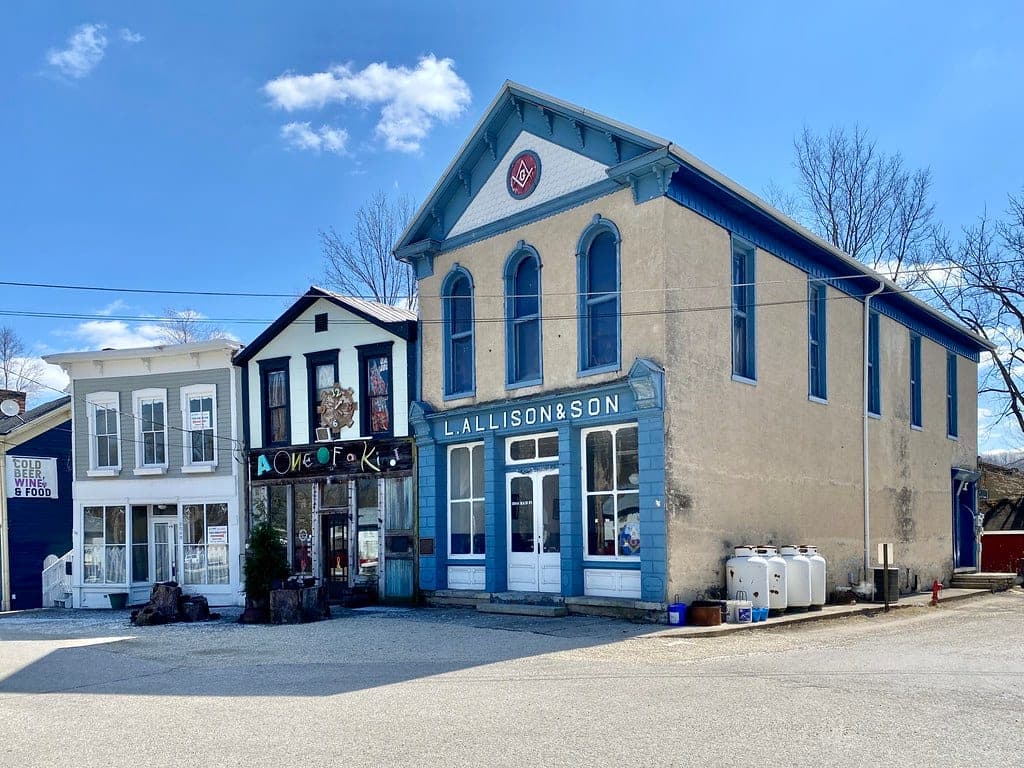
We work with main-street businesses in towns with 6,000 or 12,000 or 22,000 people. The math in those markets is genuinely different from the math in a city of two million. What works is different, what wastes money is different, and the timeline is different. Most of the standard playbook needs to be thrown out or rewritten.
Here is what actually moves the needle when your market is a town instead of a city.
What changes when the market is small
Three things change, and each one rearranges the strategy.
There are fewer competitors. A pizza search in Brooklyn returns hundreds of viable businesses. A pizza search in a town of 12,000 returns four or five. Ranking sixth in Brooklyn is invisible. Ranking sixth in a town of 12,000 means there are only five places ahead of you and most weeks one of them is closed. The slope from "invisible" to "every customer sees you" is much shorter.
Search volume is lower per query. A query for "auto repair near me" in a small town fires maybe ten or twenty times a day instead of a thousand. Total opportunity is smaller, but so is the noise. A handful of customers a week from organic search can move a small business from "comfortable" to "booked out two weeks."
The queries themselves are different. Big-city customers search "best Italian restaurant SoHo." Small-town customers search "[my town] pizza." Or just "[my town]" plus a service. The qualifier is the place, not the adjective. A small-town business that mentions its town in the right places — page titles, headings, the meta description, the map pack — wins simply by showing up named.
The math that actually matters
In small markets, three signals do disproportionate work:
Google Business Profile completeness. In a city, half your competitors have polished GBP listings and the bar is high. In a town of 8,000, most listings are half-finished, three of them haven't been updated since 2021, and one still has the old owner's phone number. A finished GBP — real photos, accurate hours, weekly posts, responses to every review — beats the competition almost without exception. We have written about this at more length in the Google Business Profile post; the short version applies double in small markets.
Review volume and velocity. Big-city businesses fight over 300 vs. 400 reviews. Small-town businesses fight over 8 vs. 30. The leverage on every individual review is enormous. A business that asks for reviews after every job and gets fifteen genuine five-star reviews over a year will outrank competitors that have not asked at all. The honest number to aim for: fifteen real reviews in twelve months. That is achievable for any service business that asks.
On-page localness. A homepage that says "we serve the area" ranks for nothing. A homepage that says "we serve Beaver Dam, Waupun, Brownsville, and the rest of Dodge County" ranks for each of those specifically. The schema markup, the headings, and the body copy all need to name the place. We see this missed on roughly nine out of ten small-business sites we audit.
The three things that work harder
For practical action, three things have outsized return per hour invested:
Service-specific pages, named for the town. Most small-business sites have one page that lists everything they do. They should have one page per primary service, each titled and written for the town. "Roof repair in [town]." "Wedding photography in [town]." "HVAC service for old farmhouses in [region]." Each page captures a different search intent. Five well-written service pages outrank a single sprawling homepage every time.
Reviews on the platforms that matter, in order. Google first, distantly second is Facebook for older customers, and a distant third is industry-specific platforms (Yelp for restaurants, Houzz for trades, Avvo for legal). Do not chase reviews on six platforms; do all your review work on the platform your customers actually use. For most rural businesses, that is Google.
Structured data the engines can actually read. Most small-business sites emit no schema markup at all, or whatever default their builder included. A site with Organization, LocalBusiness, Service, FAQPage, and BreadcrumbList schema gives Google — and increasingly the AI search engines — a complete picture of what the business is, where it operates, and what it offers. The difference shows up in rich results, AI-Overview citations, and the entity associations that determine which business gets recommended when a customer asks Copilot or ChatGPT about local services.
The three things that waste budget in small markets
Equally important: what to stop spending on.
Backlink building schemes. Buying backlinks in a small market is buying tickets to a fight nobody is having. Big-city local SEO sometimes involves real link competition; small-town local SEO almost never does. We have audited dozens of small-business sites that paid for "monthly link packages" and could not find a single ranking change attributable to the links. Save the money.
AI-generated location pages. A common pitch is to spin up fifty location pages — one per nearby zip code — using AI templates. Google's spam detection identifies these patterns and either ignores them or penalises the site. They do not work, and at this point most small-business owners can spot them too. Three real service-area pages outrank fifty templated ones every time.
Generic agency content factories. A blog post a week, ghostwritten from a content brief, generic stock photos, no real local information. These do not rank, and they age badly. One real post a month — written by someone who knows the business and uses the town's actual landmarks and the actual seasons — does more for ranking than a year of factory output.
What about the AI search surfaces
The newer surface to think about: AI Overviews, Copilot, Perplexity, ChatGPT. The good news for small-market businesses is that AI engines are mostly drawing from the same signals Google uses for the map pack — completeness of profile, review density, structured data, on-page localness. A small-market business that wins the regular local pack is also winning the AI surface, more or less by accident.
The one extra thing worth doing for the AI surface is having a clear, factual "about" page that the AI can quote. Founder name. Year founded. Address (or service area, if mobile). Three sentences about what makes the business specific. AI engines like to cite these when a customer asks "tell me about [business]." Write that page in plain English without marketing language and you will be quoted.
The realistic timeline
A small-business that does the above well — finished GBP, weekly review-asking, three to five service pages, real schema — should see noticeable movement within ninety days. Most of the movement is the GBP starting to rank in the map pack for the obvious queries. Within six months, the service pages start showing up in regular search for the long-tail queries. Within a year, the business is the default answer for its primary service in the town.
That is not magic. It is consistent execution on the four or five things that matter, plus a willingness to wait. The advice often misses the waiting part. Local SEO in small markets is not a fast lever. It is a compounding one.
What we ship for small-market clients
When Mule takes on a small-market client, the local SEO portion of the build covers six things:
- A finished Google Business Profile, with real photos shot or sourced, accurate hours, the right category, and a description that uses the town and county names.
- One page per primary service, each titled and written for the town, each with its own schema.
- LocalBusiness, Organization, Service, FAQPage, and BreadcrumbList schema across the site, plus per-page WebPage schema.
- A review-request workflow — usually a follow-up email template — calibrated to the business's normal customer cycle.
- Optional: a Bing Places listing claimed and finished, which is increasingly important for the AI-search surfaces.
- A 12-month plan, written down, for what content to add and when. Not a content calendar — a plan with realistic cadence for the business's actual schedule.
That is the whole list. There are not twenty more steps hiding behind the obvious six. The work is more boring than the industry would like you to believe.
The bottom line
The local SEO playbook that ranks a Brooklyn pizza place at position three out of four hundred competitors is the wrong playbook for a rural HVAC company competing against three other businesses in a town of 9,000. The mechanics overlap but the leverage points differ. The work in a small market is less competitive and more rewarding per hour invested. The catch is that almost nobody does it consistently, which is why the businesses that do show up rank.
If you are running a business in a small market and the local SEO advice you have been given feels designed for someone else, that is because it was. The version above is the one calibrated for your market. Most of the work is one finished profile, three real service pages, fifteen genuine reviews, and a year of patience. That is the boring, accurate truth.